My 2014 Bridger Ridge Run recap

First of all, I wanted to thank all the race coordinators and volunteers for helping us runners do what we love and congratulations to all the runners who ran this amazing race. Also, check out the trailer above for some great footage of the race and please support the film.

My goals for this year’s BRR was to have fun and run faster than my 2011 time of 3:40:56. I felt like I was in pretty good shape and knew the course a little better from running it that year and my barefoot attempt in 2012.

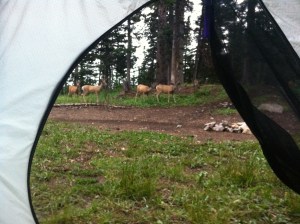
The night before the race I camped near Fairy Lake at 7500 feet.IMG_2639 I get excited the night before races so I like to camp and watch the stars. This year I was treated to 4 huge bucks hanging outside my tent at night.
I woke up at 5 am, ate and went to the start where I hiked around Fairy Lake and then warmed up running for about 30 minutes. I knew this year there would be about 6-8 runners who could run faster than me. Since the BRR is a relatively ‘short’ and fast race for me, I wanted to be adequately warmed up. Looking back, I wish I warmed up for an hour.

The race started and I immediately felt ‘off’. No big deal, I knew I just needed to get sufficiently warmed up. Going up Sacajawea Peak which tops off at 9839 feet, I felt sluggish and tired. For the first half of the race I ran with several runners, chatting and joking as I continually tried to get into my groove.

I didn’t get into my groove till Baldy peak which is over 15 miles into the 20 mile race. The middle section of the race was quite a struggle for me but I was having fun and pushing myself. It was great to run with other runners and cooperatively help each other out with encouragement and conversation. As I ran along, I was struggling with the uphills but I felt like I was faster this year on the downhills and rocky, technical sections of the race. I ate two Hammer gels and drank about 20 oz of water during the race.BRR

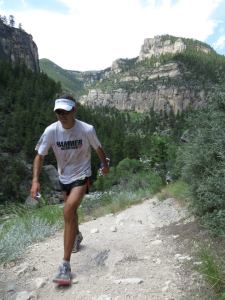
As I approached Baldy, I was finally feeling pretty good and started the 4-5 mile rocky descent knowing I had a lot left in my legs. I bombed down it which for me was just about all out. Running this section is always interesting for me because I feel totally out of control but completely in the present moment. Since I practice my running technique so much, I’m able to run pretty fast downhill with confidence and speed. As I approached the finish, I could hear the crowd below at the M and I was very happy to be finished.  I finished in 4th place with a time of 3:46:04.

Overall, I didn’t run as fast as I wanted but more importantly I had a ton of fun, ran with great friends and got to cheer a lot of people on. Running the BRR is so much more than finishing times and place. It’s about doing what we love, sharing our passion for running and enjoying this beautiful place we call home. Again, congratulations to everyone who ran. The BRR is a superb race with amazing volunteers and support, I highly suggest the race to any trail runners out there who want a unique, one of a kind experience.

Race Recovery Tips

I share some of my personal tips for optimal recovery:

1. A soak in a creek or a cold bath/pool will help flush your muscles of metabolic wastes.

2. Be sure to go for an easy walk, hike or run each of the next few days to help reduce soreness and tight muscles. Adequate sleep is also essential.

3. Instead of NSAIDS (aspirin, Ibuprofen) that may have harmful side effects, choose natural, food based anti-inflammatories. An all natural supplement that works really well is Tissue Rejuvenator (Get 15% OFF) from Hammer Nutrition.

4. Drink plenty of water and eat a clean, Wholicious Living diet with lots of natural antioxidants and anti-flammatories such as turmeric, ginger, berries, flax oil and wheatgrass.

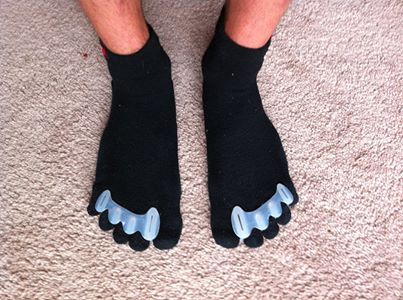
5. Try to put your legs up a couple times a day. Compression socks or shorts may be beneficial as well. I wear Correct Toes after races which feel so good and keep my feet healthy.

6. Gentle massage after a race can really be beneficial. I sometimes use a foam roller.

The quicker you recover, the quicker you can get back to doing what you love!

Damian Stoy is a professional ultra runner who has been injury-free for over 10 years. He offers online services, workshops, private lessons and nutritional coaching.

Ridge Run Tips

Are you running the Bridger Ridge Run? Here are some race day tips to help you have your best race possible.

1. To prevent stomach issues and increase performance, don’t eat too much for breakfast or the night before. Before races, I usually eat about 2 bananas or about 400 calories of Hammer Perpetuem for breakfast. I eat dinner the night before by 5pm and it’s usually a fruit and greens smoothie which is easy to digest.img_01231

2. During the race, focus on efficient technique. For uphills, I focus on high cadence and not pushing off which both greatly save energy. Allow yourself to fall into the uphill, there is no need to push off which wastes a lot of energy. For downhills, I focus on engaging my lower abs and high cadence which minimizes impact and reduces fatigue. The downhills are where you can conserve energy and make up the most time. Efficient technique will also help with the rocks and technical terrain by helping with balance and reducing fatigue.

3. Start slow and walk the steep uphills. You can most likely speed walk the uphills faster than running and save a lot of energy. Folks are surprised to hear that I speed walk most of the uphills. I ran the 2011 BRR in 3:40 and probably walked 40 minutes of the uphills.

4. During the race, shoot for about 120-200 calories per hour of easily digestible, high carbohydrate foods such as Hammer Gels, Heed or bananas. Depending on the weather, drink about 12-20 oz of water per hour. Also, a couple of Endurolytes an hour will help prevent cramping and fatigue. Get Perpetuem, Endurolytes, gels, Heed and other Hammer products 15% off HERE.

5. Go out and have fun! Enjoy the scenery and beauty of running in the mountains. Meet new friends and focus on relaxing and having fun. Not only will the race be more enjoyable, but you’ll probably perform better.

I hope these tips help you have a fantastic race! Share this blog with friends running the race and look for my Ridge Run recovery tips later this week.

UConn FASTER study and blood test results

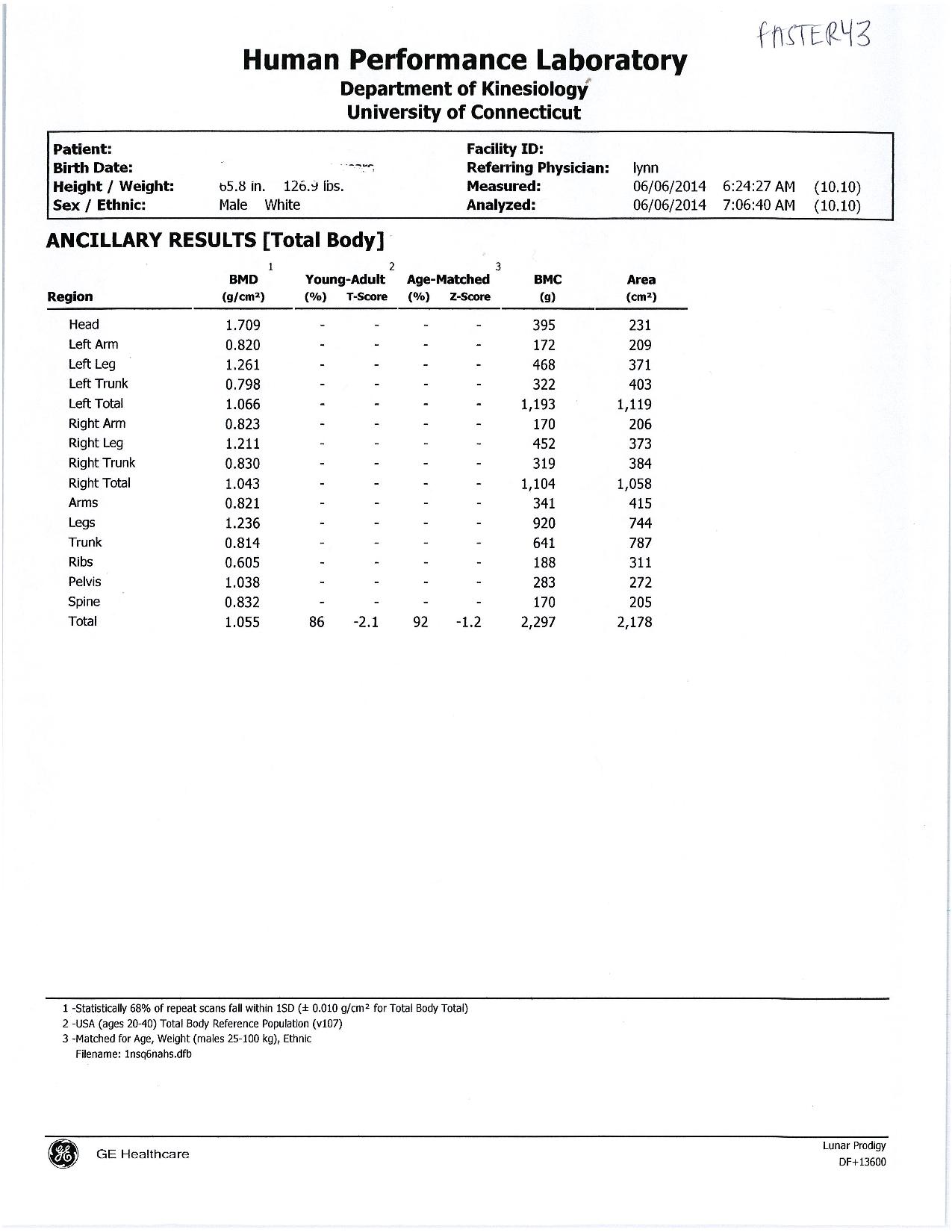
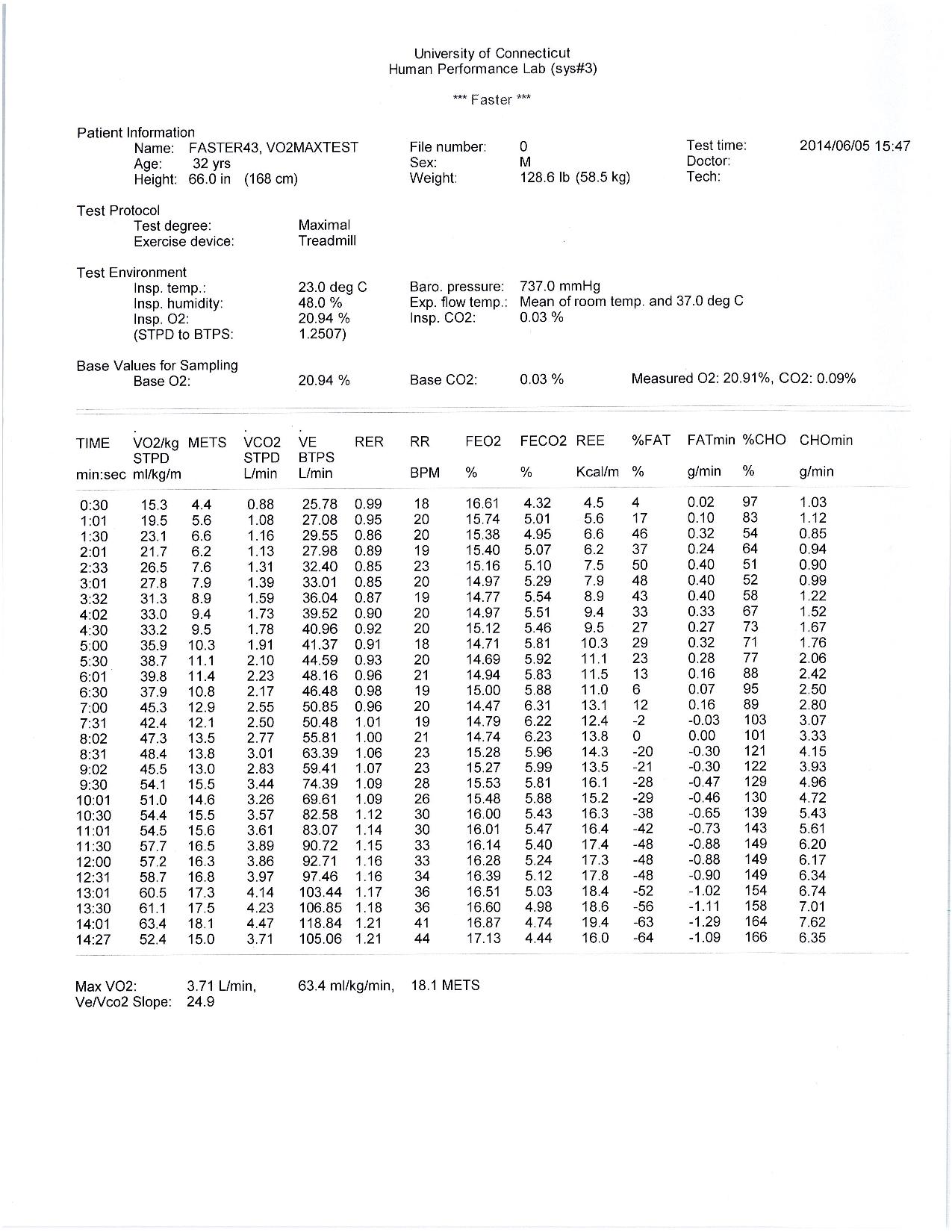
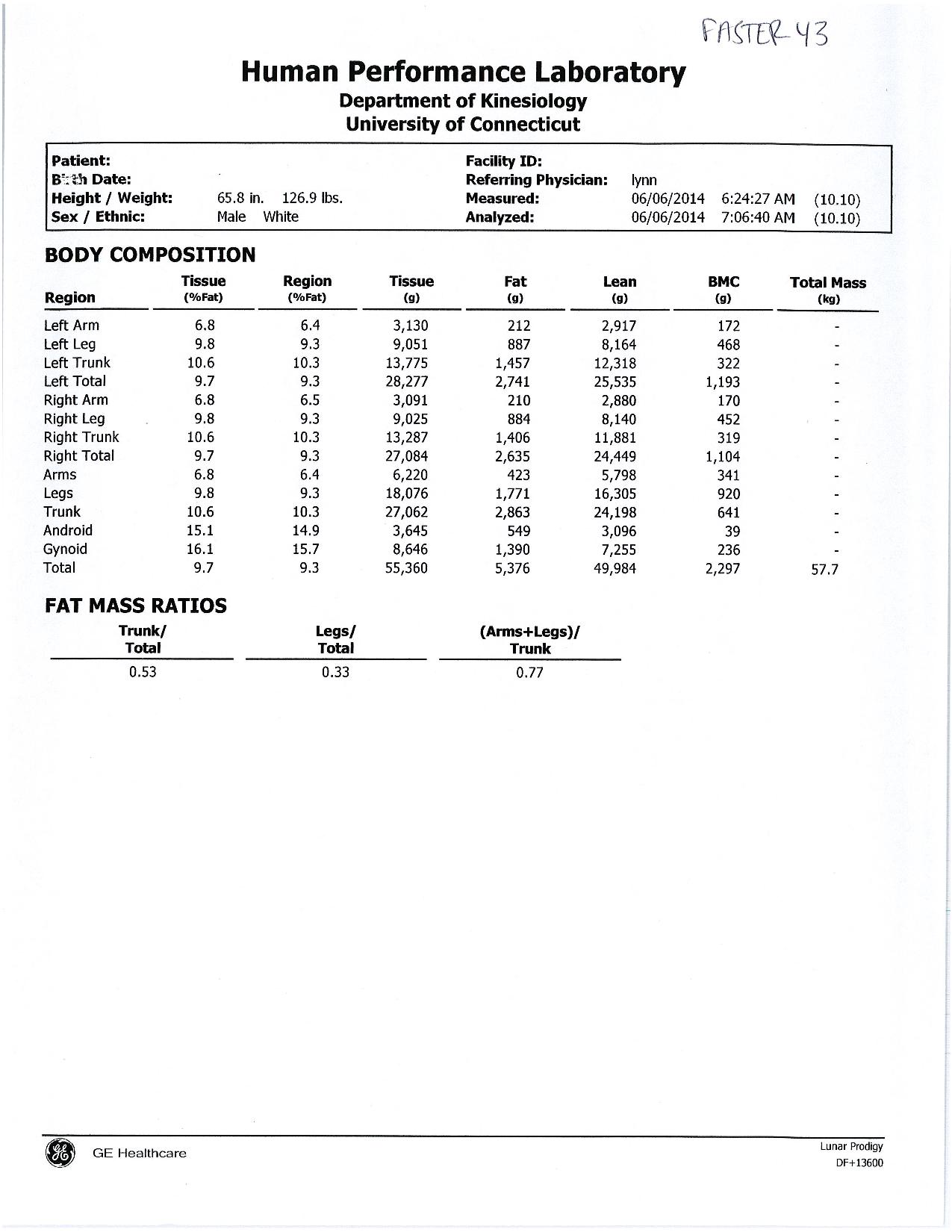
I’d like to share my comprehensive blood test results from the UConn FASTER study and their Human Performance Lab. They are studying elite ultra endurance athletes with varying diets. I’ve been vegan or vegetarian for 13 out of the past 14 years and the past 16 months I’ve been eating a ‘fruitarian’ high carb diet.

Bottom line: My results were about perfect. The study showed I use fuel very efficiently, my nutrient levels are where I want them to be as well as my cholesterol, protein, urea, hematocrit, hormones, triglycerides, body fat %, lipoproteins and much more that they tested.

Damian received a Certification in Plant-Based Nutrition from Cornell and offers Nutritional Coaching.

FASTER results-page-001FASTER results-page-003

FASTER results-page-004 FASTER results-page-002View my complete lipoprotein and cholesterol results HERE

Bighorn 50 recap

10500512_10154308742355584_8044031842047266675_n
Photo courtesy of Matt Welsh

The 2014 Bighorn Mountain Wild and Scenic 50 miler is a spectacular, challenging and remote race in the Bighorn mountains of Wyoming. 2014 was the 5th time I’d run the race and experience greatly helped. Even though I won in 2012 as well, this year was much more challenging for me mentally. In 2012, all I had to do was push through the physical pain to run fast. In 2014, I struggled right from the start and had constant doubts of finishing let alone doing well.

Maybe I was just having an ‘off’ day or maybe it was all the mud and standing water we had
to run through from the start. I just wasn’t flowing like I usually do. The long, grueling climb out of Footbridge (mile 18) actually helped by placing a huge physical demand on my body and distracted my mind from doubt and fear. I focused on my efficient technique which greatly helped.  I also kept repeating different mantras including “I am light, I am strong” and “I feel no pain” which helped keep my mind from wandering back towards thoughts of quitting.

Around mile 38 I caught up to Adam St. Pierre and ran with him for a few miles which was a huge boost for me. We chatted for a bit and encouraged each other 10476029_10152172923117724_387104990_nto finish strong. Then, around mile 40 which began a steep 7 mile descent, something just clicked and I took off.  I bombed down and never looked back. I absolutely flew downhill with joy and freedom.  I knew from previously running the race that this was a huge risk and I may pay the price on the last 6 miles of road to the finish. To my surprise, I hit the road and continued to run fast and strong. Lindsey said I ran most of it going sub-7 minute miles. This was by far the ‘easiest’ part of the race for me. I finally felt good both mentally and physically.
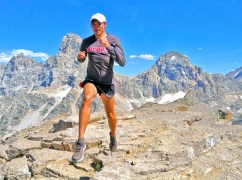
I finished strong for 1st place in 8:12:41. Even though in 2012 I finished over 20 minutes faster (super muddy conditions in 2014), this year I was incredibly happy to finish well and conquer my strongest opponent-my mind and its enduring weapons of fear and doubt.

Thanks to all the volunteers and folks who helped out with the race. Without you, all of us runners couldn’t do what we love so much. Finally, thanks to my sponsors who support my running passion.

Why running technique matters

Every other sport practices technique. Why would running be any different? The more efficient you run the fewer injuries you will have, the faster you will run and you will have less fatigue.

As a biomechanics specialist, when I watch kids run they run completely different from most adults. Yes we are born to run. Unfortunately, we ‘forget’ how. The reasons are Damian in Tetonsmany. We are taught to overstride, we lose core engagement because we sit so much, many of us have poor posture and alignment and most shoes promote an excessive heel strike. Fortunately we can break these poor habits and create new efficient ones fairly easily.
When runners run inefficiently, they are more likely to get injured, fatigue quicker and have more pain. After runners learn how to run more efficiently, they run with less impact, fewer injuries, more speed and greater ease. Unfortunately, there is a LOT of poor information out there regarding running technique. The key is learning from an expert who has gotten results for them self AND gets results for others.

Damian Stoy is now a professional ultra marathon runner who has been injury-free for over 9 years. But years ago he use to suffer from many chronic running injuries. The solution for him was fixing his running technique. Since 2010, he has taught hundreds of runners how to run better, faster and pain-free.

Damian teaches workshops, private lessons and offers online coaching & online technique guidance plans. Click on each to learn more.

Foods to improve athletic performance

-Damian Stoy is the founder of Wholistic Running, respected coach, biomechanics specialist and certified running instructor. As a professional ultra runner he has been injury-free for over 9 years.  Read his bio and race results.


Damian offers Online Coaching and Online Running Technique Improvement Plans


Free Running Technique Diagnostic

Do you wonder if you heel strike or have other inefficient biomechanics? Want to find out what may be causing your running injuries or pain? Want to learn how you can run faster and easier? A free running technique diagnosis from Damian Stoy, a biomechanics specialist, respected coach, certified running instructor and professional runner is exactly what you need.

Step 1:  ‘Like’ our Facebook post and leave a comment about why you enjoy running. Feel free to share the post as well which will ensure that you get your results quicker.

Step 2:  Email Damian a 30 second to 1 minute video of you running with side and front views.  Videos must be received by 4/14/14.  Email files to wholisticrunning@gmail.com

Step 3:  Damian will email your results and analysis including pictures and specific, detailed information about your running technique.

Questions about Online Video Analysis and how to send a video can be found HERE

Fixing foot injuries and issues

Foot pain can often linger and become a chronic injury. Prevention is a must for all runners before you get injured. These tips will help you prevent AND fix foot injuries.

4 effective and natural steps to fixing your feet and keeping them healthy:

  1. Wear Correct Toes to renew, align and strengthen your feet.
  2. Wear Altra shoes which allow your feet to spread and move naturally.
  3. Follow a Wholicious Living nutritional lifestyle to reduce inflammation and pain and speed up the healing process.
  4. Learn low impact, efficient and pain-free running and walking technique. It’s amazing how many people I’ve helped with a couple simple exercises.

feet

-Damian Stoy is a professional ultra marathon runner, founder of Wholistic Running, biomechanics specialist, running coach and has been injury-free for over 10 years.

To receive more tips from Damian, sign up for our free emails HERE.