Must Read Books for Runners

Damian Stoy is a professional ultra runner, coach and founder of Wholistic Running. He has been injury-free for over 10 years using his methods. Here are his must read books. Read his bio and race results as well.
Eat & RunScott Jurek is one of the world’s greatest athletes. He is 7-time winner of the Western States 100 and the U.S. record holder for the 24-hour run (165 miles). He is also vegan and explains why eating whole foods is most beneficial!  ‘Eat & Run’ will inspire and educate everyone.  Scott includes recipes and tips to help get you started on your path to greater health through running and eating.

.
running-on-empty

Marshall Ulrich ran 60 miles a day for 52 straight days in a record setting run across America at the age of 57.  I was fortunate enough to coach with him this Summer!  ‘Running on Empty’ is the story of his 3,063 mile run that will make you laugh, cry and want to start your own adventure.  Marshall has also won Badwater four times, is the only person to ever do a Badwater Quad and has climbed the highest summits on all 7 continents.

                .
thrive-book

Brendan Brazier, a professional Ironman triathlete, wrote ‘Thrive: The Vegan Nutrition Guide to Optimal Performance in Sports and Life’.  As an elite athlete, Brendan tried every diet out there.  He found eating a whole foods, vegan diet made him feel the best and perform optimally.  ‘Thrive’ is full of recipes, tips and reasons why eating a whole foods, vegan diet is the way to go for athletes and non-athletes.

.
chirunning book

Danny Dreyer, founder of Chi Running, transformed the running world with his revolutionary technique and book.  Thousands of runners around the world are running with fewer injuries, more efficiency and greater joy.  The book is full of lessons and exercises to understanding the fundamentals of the Chi Running technique.

.

.

born-to-run-cover

‘Born to Run’ changed the way we look at running. Humans are truly born to run, if we do it correctly. Christoper McDougall’s book includes incredible characters, amazing athletic achievements, cutting-edge science, and, most of all, inspiration. These amazing stories will motivate you to run simplier and with a deeper connection to your self and nature.

Run easier, not harder

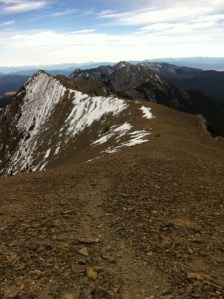
I’m here to share with you an approach to running that is very effective, enjoyable and has long term benefits.  The concept is to view running differently than you probably currently do.  I am suggesting you set a goal for running to be easier, not harder.  Do you view running as a workout or mundane, exhausting activity?  Keep reading because I want you to enjoy running as a life changing, effortless, soul satisfying journey.

You may be saying, “But I don’t want running to be difficult, it just is.”  I am here to say it doesn’t have to be that way!

Why do you run?  Maybe it is to stay in shape, lose weight or get a workout.  Do you have specific running goals?  To get faster, run a specific race or run farther.  Well, I’m sure you have been told and believe that in order to reach these goals and have specific results you need to run more, burn more calories, run faster, work harder and sweat more.  To be a better, faster runner you need to train more, train faster.  Well, this approach isn’t very effective, leads to burn out and it sure doesn’t sound fun.

There is an alternative approach that is more effective, fun and will have long term results.  Running can be effortless, fluid and enjoyable.

This is what I recommend.  Decide to transform running into an enjoyable experience, even a moving meditation, by changing a couple of simple things.  Choose a different purpose for why you run.  Maybe to enjoy the beauty of the outdoors.  Or because you love the feeling of movement.  The feeling of setting a goal and accomplishing it.  Maybe you can run for a good cause, a specific goal or higher purpose.  Or maybe just because you truly love to run.  I also suggest focusing on your technique, breath and the feeling of how you move. This can really transform running into a moving meditation and into a practice.  Instead of running being a mundane workout, it becomes a lifelong journey full of lessons, incredible benefits and pure enjoyment.

I also suggest giving up the watch, the GPS and heart rate monitors.  Skip the treadmill, the workouts and instead, head into the hills, mountains, woods and abundant beauty of Earth to play.

Instead of work, transform running into play by changing your mindset.  Many successful elite runners approach running this way.  Sure, they run very intensely.  But it is approached as a playful, challenging and rewarding gift.  Not painful work that has to get done which results in burn out and boredom.  Learn to love running by changing why and how you run.

Finally, I recommend finding out more about Wholistic Running and learning from a certified running instructor such as Damian.  Damian can teach you to run more efficiently so it is physically easier and transforming your running into an enjoyable meditation and not a painful workout.  You can learn to run more relaxed and effortlessly. Wholistic Running is easy to learn and the results are very rewarding and long lasting.

Sub-2:30 marathoner Dr. Mark Cucuzzella runs easier, not harder.  Check out         Natural Running Center

Previous posts:

Bridger Ridge Barefoot Run

Running the Bridger Ridge barefoot has been a goal of mine for a few years.  This 20 mile run traverses the Bridger Mountains in Bozeman, Montana and is considered “possibly the most rugged and most technical 20 mile trail race in existence”.  To do the run unsupported and barefoot would be a challenge to say the least.

Why I would want to do this is a question I’ve been asked many times.  There is no easy answer but a few things come to mind.  1.  No one has done it before  2.  It would be harder than anything I’ve done before including several 100 mile runs  3.  People have said it is impossible  4.  I had to find out if I could do it.

I pushed back the start date for my attempt of The Ridge because of my decision to run two races this Fall.  The first was the Wasatch 100 in early September and the Yellowstone-Teton 50 which I completed and won a week before my barefoot Ridge Run attempt.  This later start meant colder conditions and more snow and mud than ideal.

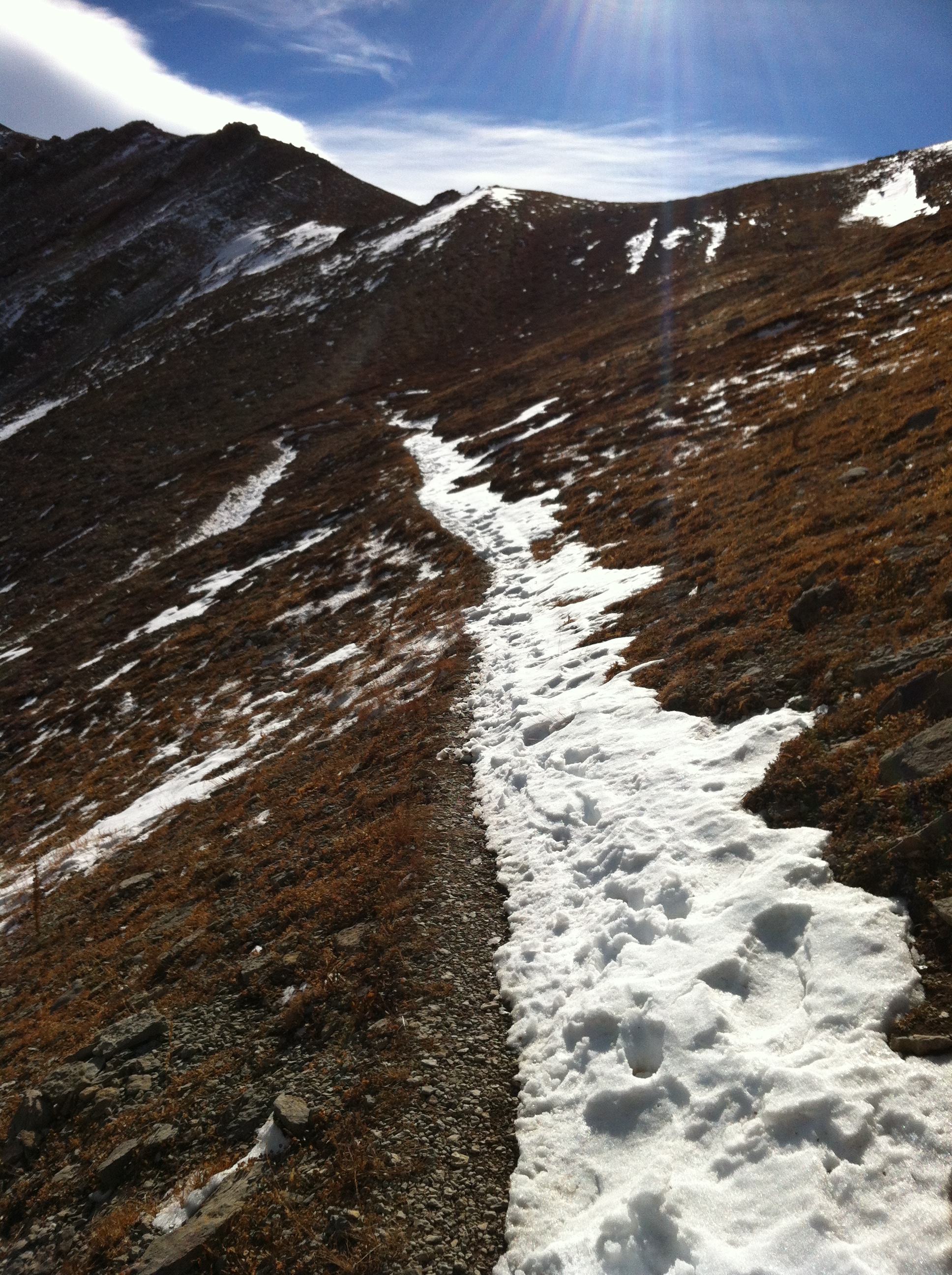
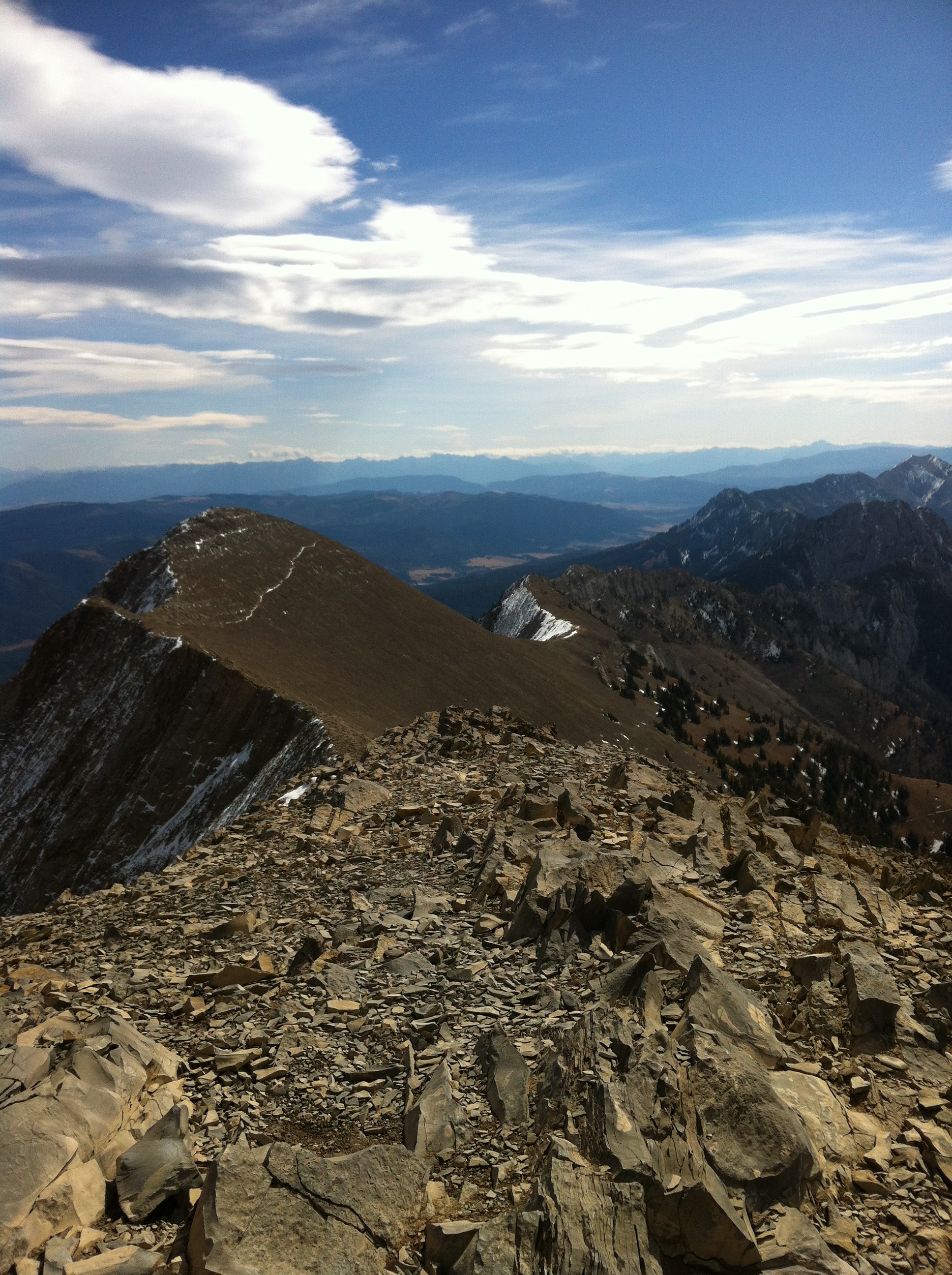
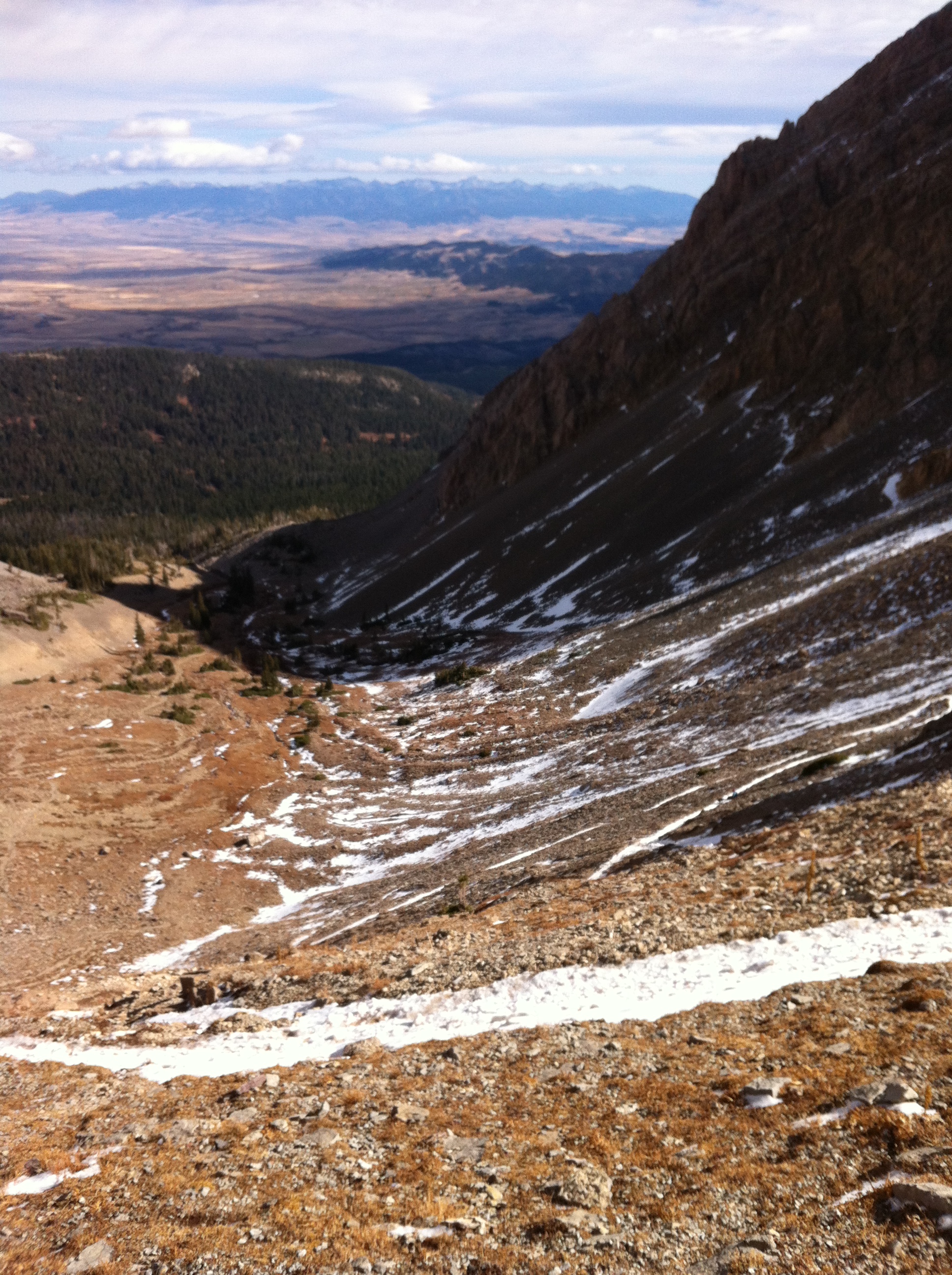
With the help of friends, I reached the trailhead around 11 am.  I decided on a mid-morning start to allow the air, soil and rocks to “warm up”.  Temperatures at the start were in the 40’s and it was windy and mostly cloudy.  I hesitantly took off my shoes and began my ascent up Sacajawea Peak at a decent clip.  This almost 2,000 ft. climb had a mixture of thin snow and cold rocks.  I kept going back and forth whether it was easier and more comfortable to run barefoot in the snow or on the rocks.  I’m still conflicted on that one. The ascent up Sacajawea proved to be tricky.   Over half way up was a dangerously steep slope with considerable snow and ice.  I had to kick ‘boot’ steps into the snow for traction…barefoot.  I was constantly slipping down slope but determined to keep moving up.  I passed about 10 people on the ascent and a few of them had comments such as “maybe barefoot is easier” or “that looks easier” and “wow, he’s flying”. Maybe I made it look easy and I was flying but it…kinda sucked.  I reached the summit probably 15 minutes slower than when I’ve ‘raced’ The Ridge.  Shit, I was cold. The amazing views on top of Sacajawea kept me determined to keep moving.  My feet were a strange combination of incredibly cold, sore, sensitive and numb.  Pretty typical for a barefoot run but I still had 17 miles to go on very rocky terrain.  Going down Sacajawea was a challenge because of its sharp, loose rocks.  This wasn’t much of a problem for me because I was prepared for this (unlike the snow and cold mud).  I’ve been running barefoot for the past 8 years or so.  I’ve had several runs over 30 miles barefoot, mostly in the desert Southwest.  I’ve also run 10+ miles barefoot in the Bridgers before but never this far or on top of The Ridge for so long.

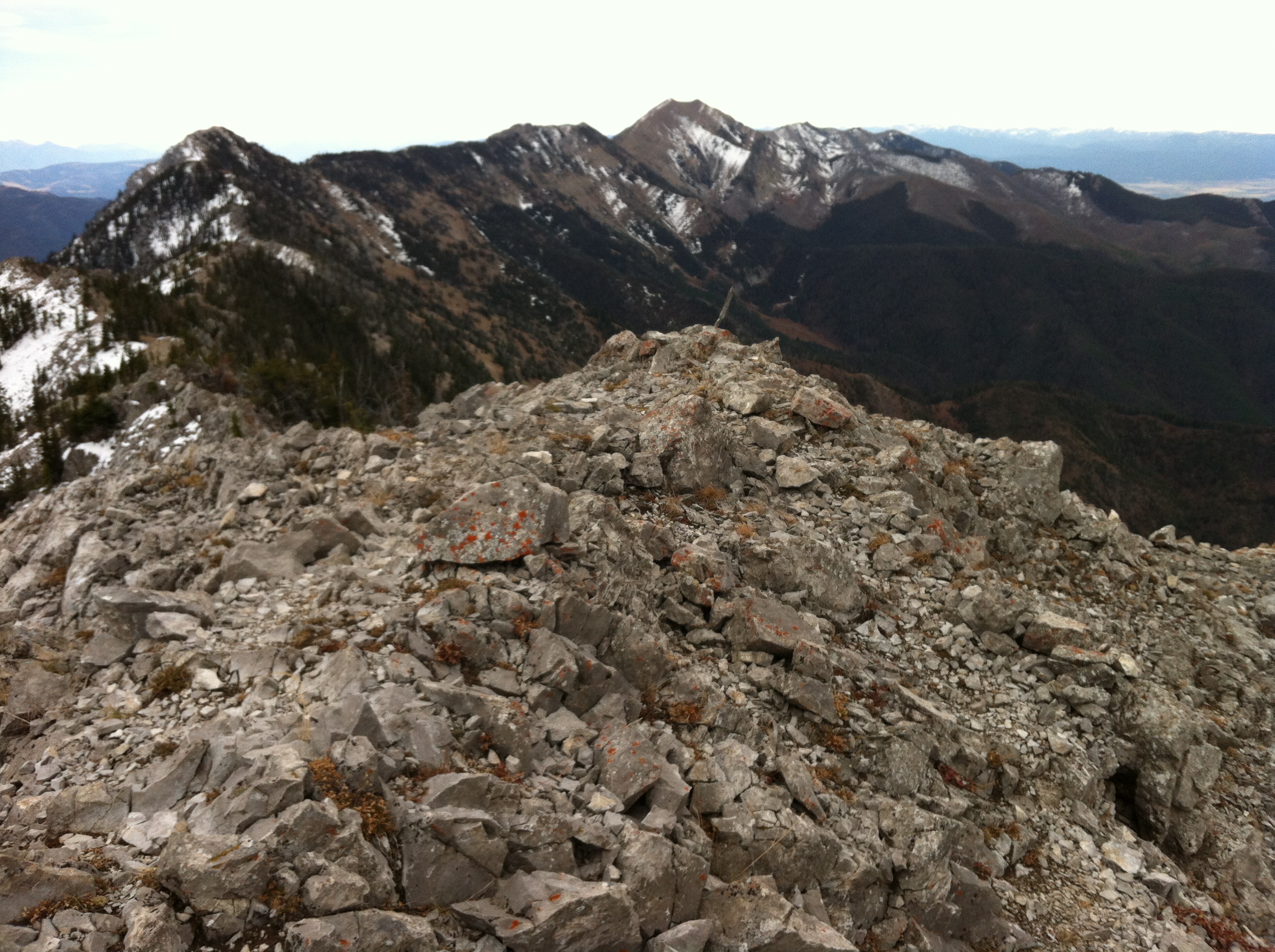
I knew the run down to Ross Pass would be one of the ‘easier’ parts of the day.  I wanted to make up time here so I cruised this section as fast as I could barefoot.  This equates to probably 5 mph versus in shoes I’d be running it at about 9 mph.  My feet were holding up very well and I was pretty confident about the day.  The only thing I was nervous about was the snow and mud as I made my way towards Saddle and Bridger Peaks. I continued my barefoot run on The Ridge moving very slowly.  Some parts I was averaging about 2 mph.  To call this a run may sound comical but I was truly running much of the traverse albeit very slow.  Also, much of the run was climbing and tip-toeing over sharp rocks at less than 1 mph.  It was a very painful, slow going forward progress.  I was grateful to have my experience as an ultramarathon runner knowing all I had to do was put one step in front of the other and eventually I would finish my goal.I continued to make my way south towards the M.  Running The Ridge barefoot was proving to be possible, painful and enjoyable.  The benefits of running barefoot are hard to describe but it forces you to slow down and really appreciate the beauty this world has to offer.  You have to be in the present moment and your mind cannot wander.  It turns running into a moving meditation which is a truly sublime and wonderful experience.   The challenge for today was complete concentrating, determination and focus for 8 hours. I continued my traverse of The Ridge staying around 8500 ft with many ups and downs both literally and figuratively.  I continued to ask myself why I was doing this.  But my experience as a runner and yogi motivated me to keep moving.  At the time, I didn’t know why I was doing this but eventually I would find that answer.  Running barefoot not only increases my connection and love for Nature but also teaches me about my greater Self and about life and its wonderful mysteries.

I continued to experience longer and longer stretches of mud and snow.  I was beginning to doubt if running The Ridge barefoot today was possible and if it was smart.  My feet and toes were beginning to get frost bite and I just didn’t know if this goal was worth long term injury.  About 11 miles into my barefoot attempt, I decided to put on shoes.  It actually wasn’t a difficult choice, I had to or risk long term damage to my feet.  Just the thought of that now makes me shudder.  How important our feet are.  Sure, for 11 miles my feet were incredibly cold, sensitive and the rocks were unimaginably painful.  But frost bite is not something I like to mess around with.  I put on my shoes and continued on my way with not a single regret.

The rest of run was just as spectacular as the rest, just a little faster.  Going from barefoot to wearing shoes made me feel like I was wearing balloons on my feet they were so soft and cushiony.  I spent the last 9 miles enjoying the beautiful Fall day and grateful I get to do what I love to do.  How glorious it is to be moving in the mountains,  in the wilderness.

I reached the finish over 7 hours after I began.  Compare this to when I raced The Ridge in 2011 at 3:40 and to my 50 miler the week before which took me 7:11.  Running barefoot in the mountains is very slow.  It is also incredibly rewarding.

Something I realized today is that running The Ridge barefoot is possible and will happen.  I will attempt it again with better conditions, probably the Summer of 2013.  I expect it to take me 10-12 hours to complete, at least.  For now, I found the answer to some of my questions even if they aren’t the answers I wanted:  no one has completely run The Ridge barefoot including me, it was harder than my previous 100 mile races and it is possible, just not by me today.  I now know it is possible, anything is possible.  Everest and the Grand Teton were attempted dozens of times before successfully summiting them.  Is running The Ridge barefoot comparable?  No, but it’s the concept.  Just like anything else in life.  If at first you don’t succeed, try, try again.

You can see the rest of my pictures here

Race preparation

Here are some quick tips to help you have your best, most enjoyable race day experience.

Pre-Race

  • Hydrate well. Be sure to drink enough so that your urine is clear the entire week before the race.
  • Eat well.  Forget carbo-loading!  Don’t change your diet too much.  Eat healthy whole foods and keep it simple.  Humans have enough fat stored on us to run much farther than a marathon.  Check out my other blogs about specific performance enhancing foods.
  • Do not eat too much the morning of the race!  Before 50 and 100 milers, I eat a banana for breakfast and drink a coconut water and that’s it.
  • Rest:  The less you do the week before a race, the better!  Run very little and easy!

Race

  • Try to drink 8-20 oz./hour of water during a marathon depending on how hot it is.
  • For races half-marathons and shorter, I suggest not consuming any food or water.  You should be sufficiently prepared before the race and not playing catch up.
  • For marathons and longer, consume 140-200 calories/hour of easy to digest foods during the race.  Look for gels, drinks and carbohydrate dense foods.  This reduces the chance of ‘bonking’ at mile 20.  Minimize hard to digest foods!
  • Consume electrolytes during the race from quality sources.  Hammer Nutrition’s Endurolytes and Saltstick are two great options to use during the race.  I also pre-load a few days before the race by taking 3-5 a day.
  • Go slower than you think, especially at the start.  Use the first few miles to warm up.  A consistent pace is more enjoyable and usually faster than going out too quickly.
  • Focus on relaxing both mentally and physically.  Practice your  running technique and use positive affirmations and mantras such as “I am strong, I am light” to take your mind off of any discomfort or fatigue.

Post Race

  • Within 30 minutes of any run, consume 8-16 oz. of water and 200-300 calories of a high-quality recovery drink such as Recoverite or Shakeology.
  • A natural anti-inflammatory such as Tissue Rejuvenator will help reduce soreness and help you recover quicker.

Special Considerations

A common question I have been getting lately is how to have your best race if you feel under trained.  The most effective way is to breathe easier and slower by focusing on relaxation and running with an efficient technique.  Chi Running addresses both of these!  An efficient running technique will allow you to breath easier.  Allow yourself to be ‘pulled by gravity’ by leaning from the ankles (not the waist) to reduce effort.  Watch this video to learn how.  Be ok with going slower than you are used to.  Focus on having fun and forget about your time.  Chat with other runners, enjoy the scenery and stay in the present moment.

Use positive affirmations, mantras and breath work to reduce energy usage.  I suggest you don’t try to control or judge your breath.  Instead, watch it and allow yourself to breath easily and deeply.

Finally, after the race, be sure to eat foods high in anti-oxidants and cleansing foods to help reduce fatigue and soreness.  Fruit, veggies, wheatgrass, Tissue Rejuvenator and Chia seeds can help reduce inflammation and help your body heal quickly.

Most importantly, listen to your body.  Practice accepting the conditions, where you are at and enjoying the present moment.  By going slow and having fun, you may be surprised at how well you do!

–Daman Stoy, elite ultra marathon runner, founder of Wholistic Running and Certified Chi Running instructor

Previous posts:

Why I’m so passionate about Wholistic Running

Wholistic Running has greatly enhanced my running and has helped countless other runners around the world.  Being free of injuries, running with more joy, using less effort and performing better are just some of the many benefits of what I teach here at Wholistic Running.

Let me share my story how Wholistic Running has helped me overcome chronic running injuries and stay injury-free for the past 9 years even as an accomplished ultra marathon runner (see my race results).  I absolutely love running and I have Wholistic Running to thank for this!

In the past I have suffered from many chronic running injuries including runners knee, shin splints and IT band issues.  The worst of it began 10 years ago when I developed severe patellar tendonitis in both of my knees from running.  I was in pain 24 hours a day and many days I could barely walk, laying in bed much of the time.  This lasted for over two years!  I saw some of the best physical therapists, doctors and alternative therapists in New England.  Nothing helped.

I was even told by several doctors and physical therapists that I would never be able to run again.

Since finding Wholistic Running, I’ve run over twenty mountainous 50 mile races, a few 100 milers and all of this staying injury-free for the past 8 years.  How?  Wholistic Running!

I found out about efficient running technique and quickly set out to try this technique which sounded too good to be true.  Skeptical, I went for my fourth run in 2.5 years because of being injured.  Those few previous runs were only 15 minutes and left me in excruciating pain and hobbling for days.  But this run was different.  I was focusing on my technique so intensely that when I got home, I realized I ran for over 45 minutes.  And I wasn’t in excruciating pain.  In fact, I had very little pain.

I started ‘Wholistic Running’ 3-4 days a week focusing on my running technique and I slowly healed.  Yoga helped speed up the healing process and Wholistic Running allowed me to run with less impact.  Now 8 years later, I teach the technique which helped me rediscover my passion for running and has allowed me to stay injury free since my days of chronic injuries and being told that running causes injuries and to “never run again”.

I’m also passionate about Wholistic Running because of how it greatly benefits performance.  I’m an accomplished ultrarunner because of the Wholistic Running technique and mental focuses.  Some runners tell me that the only way to run faster is to train harder.  They also say you have to train faster, go to the track and do complex workouts and that is the only way to get better.  What if this wasn’t true?  For me, it’s all about running smarter not harder.  I run 3-4 days a week (about 40 miles) with no ‘speed work’ but can still run far and fast because I have a very efficient technique.  To run faster, I relax more.  Every other sport focuses on technique, why would running be any different?

Some say I’m just naturally gifted.  Well, if being a runner with chronic injuries is naturally gifted, then there are many naturally gifted runners.  Also, in my opinion, most humans are in fact naturally gifted runners, for we are born to run.   We ‘forget’ how to run correctly.  Fortunately we can relearn how to run the way we were designed with Wholistic Running.  I’m also told “if it ain’t broke, don’t fix it”.  Well, all I can say to that is over 70% of all runners are injured every year.

I’ve been injury free for over 9 years, overcoming many chronic injuries with the help of Wholistic Running.

Finally, I owe much of my joy, love and passion for running to Wholistic Running.  Because of Wholistic Running, I get a ‘runners high’ just about every run I go on.  Running is a moving meditation that benefits my whole life and I am a deeply happy and successful person because of this.  I hope you get to experience the benefits of Wholistic Running as well.  Please practice with no expectations, a curious mind and an open heart.  It takes lots of practice, patience and determination but the benefits are well worth it!

Previous posts:

Community, support, faith and losing my Self

My passion and love for running and community continues to grow!  I really enjoy racing for it encourages my Self-Realization.  For me, races aren’t about competition, time or winning.  They are about meeting new friends and deepening existing friendships, pushing my limits, breaking my boundaries, being inspired by others and doing what I love to do.  Racing is an exploration of my Self and this place we call home, Earth.  I am so grateful to the wonderful family of running friends I have and being able to run.

I recently ran Bozeman’s Run to the Pub Half-Marathon and didn’t have any goals other than to have push my boundaries and have fun.  And did I ever!  I had such a great time chatting with other runners, checking out goofy costumes, cheering runners on and enjoying a beautiful day!

I do have to admit, I was surprised at how fast I ran and how effortless it was.  The past five months I have run an average of 2-3 days a week.  By far, most of it at a 8-12 minute/mile pace with 1 day of speedwork in 5 months.  But somehow during the race, I ran over 13 miles at almost sub-6 minute pace finishing at 1:19:54.  I keep asking, “how is that possible?”.  I believe it is a result of my very efficient technique, relaxed mental state and overall health from eating well and practicing yoga.  Chi Running continues to amaze me!

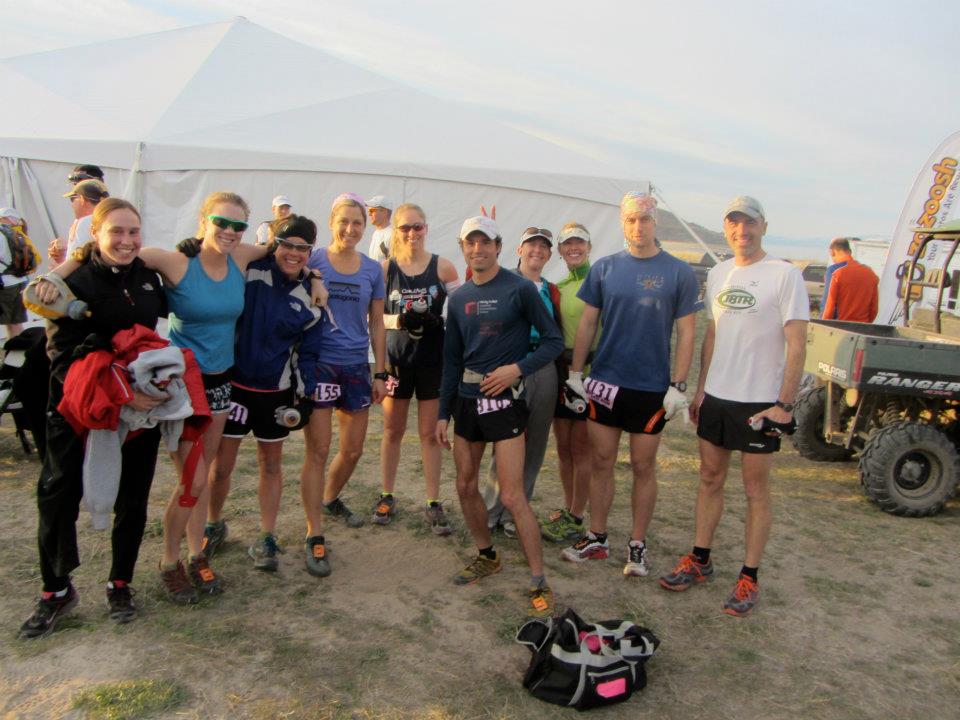
Six days later I ran the Buffalo Run 50K on Antelope Island.  This gorgeous island is on the Great Salt Lake and has unique geology, plants and bison on it.  Not to mention being surrounded by water and magnificent, towering mountains all around.  My goals for this race were to have fun and again, push my limits.  I went into the race feeling ill prepared and under trained.  Running 20-35 miles a week for 5 months is not great preparation for a 50K.  But I relied on my efficient technique, mental strength and health to guide me along.

The few days prior to the race, I was having stomach issues.  I wasn’t able to eat much or as well as I would have liked.  The morning of the race wasn’t much better.  I didn’t eat much breakfast but hoped I could rely on Chi to sustain me during the race.  As we began to race, I had the privilege to run with many close friends.  Some from Bozeman, some from Wyoming and Utah and others from surrounding states.  We goofed around and I said awkward comments and bad jokes.  I loved it!  Running with friends is very special to me and we laughed and enjoyed the magic of another day on this beautiful planet.  I ran the first lap (about 16 miles) completely with two good friends.  We were feeling really strong that first lap.  About a mile into the second lap I started to pick up the pace relying on Chi, efficiency, gravity and relaxation.  I focused on less effort to go faster.  A strange concept for many but it really works.  Relaxation equates to speed.  After a mile, I took a wrong turn to hear a friend yell “wrong way” and was teased for my mistake.  My excuse:  “I was in the zone!”

I continued to push my limits and relax even more.  I found this deep place of peace and freedom.  After the second aid station, I proceeded to get lost once again but this time for real.  I took a wrong turn and ran up a ridge to find myself looking hundreds of feet down to the correct trail below.  I stopped to assess the situation, breath and prepare for the adrenaline and joy of bombing down the mountain.  I finally got back on track, losing about 5 or 8 minutes in the meantime.  I passed a few runners for a second time, each of them asking “what happened?”.  My response, “I was in the zone!”.  My poor excuse for not paying attention.

I continued to push the pace, running as fast as I could while relaxing.  I’m amazed at how effective this can be.  I began to have pretty severe stomach and digestion issues.  After mile 20, I wasn’t able to consume any calories or liquids.  This can have devastating consequences, especially considering the heat of the day.  75 and sunny, which for a Montanan in March feels like an oven.  I was able to sneak a couple Hammer Gels and luckily Endurolytes saved the day which prevented me from cramping.

I ended up finishing with a smile on my face and the lack of ability to walk straight because of severe low blood sugar and dehydration.   I asked the EMT’s to keep an eye on me so I didn’t pass out or get lost once again.  A little Mountain Dew fixed everything within minutes.  Totally gross but I was so out of it that it tasted like heaven in my mouth.

My second lap split was about exactly the same as my first lap, I actually sped up the second half since I got lost.  I was very happy about this and how well I ran.  I finished in 4 hours and 21 minutes for 4th place.  Not bad for a Montanan in March with very little training.  Chi Running continues to amaze me!

So really, what do I love about racing?  It’s the community, support and love that abounds at races.  Especially at ultramarathons.  Egos are checked at the door and we are grateful for doing what we love.  I suggest volunteering at or running an ultramarathon and I guarantee you will be inspired.  Over and over again actually!  I’ve run quite a few and continue to be amazed and inspired by the stories of others and seeing others overcome personal struggles, pain and mental boundaries.  I look forward to my next race, whatever it may be.

Previous posts:

Reduce fatigue, race faster and perform better

Damian Stoy is a professional ultra marathon runner, biomechanics specialist, respected coach and nutritional consultant.

You may believe that you need to train harder and very often to perform well.  However, I train infrequently and perform very well (see my race results) because I run smarter not harder and I use these tips I am sharing with you now.  Eating well and an efficient running technique can greatly reduce fatigue, improve your performance and make for a more enjoyable running experience.  

What causes fatigue when you run?

Energy inefficiency:   The most effective way to have a less fatigue when you run is to reduce energy expenditure. If we can run more efficiently, we can run faster and farther with less effort and more joy. Running can literally be easier.  An efficient running technique reduces energy expenditure and increases performance. Damian teaches efficient running technique for runners of all levels.  He also offers online coaching and online video analysis with individualized technique guidance plans..

Sign upSign up for our free newsletter and blogs on running, nutrition, health, injury prevention  …
Oxygen debt:  Muscles require maximum oxygen to function optimally.  How do we increase our oxygen capacity?  One way is consuming adequate iron.  Iron, a component of hemoglobin, is what transports oxygen throughout the body.

Foods to consume daily for optimal iron levels in the blood:  chlorella, blackstrap molasses, dark leafy greens

Metabolic waste buildup:   Waste products build up in the muscles causing fatigue (i.e. lactic acid).  Having a healthy body pH is crucial for overall health but also to handle the excessive waste products accumulated during running.  An alkaline body will feel much less fatigued during a race than an acidic body.

  •        Alkalizing foods:  Fruits and vegetables, wheatgrass
  •        Acidifying foods:  Meat, excess protein, dairy, sugar, alcohol, coffee

Impact and stress on muscles:  Impact causes injury and fatigue during races.  Reducing impact is crucial for increased performance especially for longer distances but is helpful for all races.  The best way to minimize impact is an efficient, low impact running technique. 

Inflammation:  Excessive inflammation also causes fatigue.  We can reduce inflammation by going into a race with a ‘healthy’ inflammation response.  Consuming omega-3’s and other natural anti-inflammatories daily helps decrease inflammation during races.  I recommend flax oil and Tissue Rejuvenator daily.  High daily antioxidant levels as well as during a race reduces muscle damage and fatigue.  Incorporate goji berries, wheatgrass, fresh juices and lots of fruits and veggies for high levels of natural antioxidants.

Pre-Race:  I taper/rest 7-21 days before a race, depending on the specific race.  You can rarely rest too much but you can train too much before a race.  As I taper for a race, I also make sure I’m eating plenty of alkalizing foods including fruits and veggies.  I make sure to have sufficient electrolytes in my body by consuming Endurolytes for a few days before a race.

Race:  The morning of the race, I eat very little.  People are surprised to hear I eat a banana or two and that’s it before a 50 mile race.  I don’t want my digestive system taxed during the race.  If prepared properly, my body should have plenty of stored glycogen already.  Please be advised, I am pushing myself harder than the average runner and therefore am very picky.  Also, do not try any new food right before a race.

An easier and lower impact running and walking technique

Damian Stoy is a professional runner, coach & founder of Wholistic Running. He offers personalized Online Coaching and Injury Prevention Plans. Find out more HERE.

When you run, do you feel like water flowing down a mountainside?  Is it effortless, easy and peaceful?  Are you rarely or never injured?  I ask because running can be all the above and pain-free.

Think of the last time you rode a non-motorized scooter. To propel yourself forward, you would place your foot flatly underneath you and kick back.  Of course you wouldn’t reach your foot out in front of you with a straight leg, heel strike and then kick back to propel yourself.  It doesn’t work because an extended leg acts more like a brake. But this is exactly what I see most runners do. And when I say most, this MOST likely means you.

This is what I see most runners doing with their feet and legs and the same is exactly true when I see people walk!  The jamming impacts your knees and back and you are running as if you are constantly applying a brake instead of letting gravity do the work for you.  The only way to create movement is to push off with the back leg which wastes energy and causes fatigue.

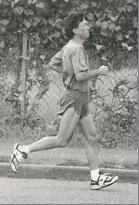
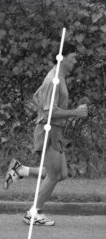
So what exactly are most runners and walkers doing (think you)?  With their legs, they are reaching out in front of them.  They may or may not heel strike and usually land with a pretty straight leg and sometimes with a locked out knee.  This results in a lot of excessive impact (think of the jamming of the scooter) and needless running related injuries.  What is important is where the foot lands in relation to your hips or center of mass.

This is how many people run.  Notice the foot landing in front of the hips and heel strike creating excessive impact especially on the knees and back.

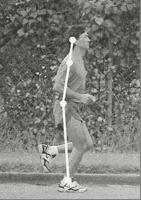
A more efficient, less impactful and more natural way to run is to have the feet land mid-foot and underneath the hips.  The faster you go, the more they will actually land behind your hips, same as when riding a scooter.

Proper running technique.  Notice how the feet land underneath or behind the hips just like how children run.

Please don’t think you accomplish this by thrusting the hips forward when you run.  You accomplish this by leaning slightly from the ankles with proper posture allowing the legs to open behind you.

I teach a very effective way for runners to easily learn how to run in a way that is more natural, reduces impact and therefore, reduces injuries.  Because you are using gravity instead of your own energy, you’ll also run more efficiently, easier and have more fun!

So much attention is being made about heel striking and how it is ‘bad’.  It is, but what is more important is where the foot lands in relation to the hips.  It is almost impossible to heel strike if your feet are landing underneath your hips.

For a more efficient, low impact way of running, try these quick tips: 

Have your feet land more underneath the hips.  You can accomplish this by having a shorter stride or higher cadence (steps per minute). Think smaller, shorter steps.  You will not lose speed because you can open up your stride behind you and relax to increase your stride length therefore your speed.  Also, with good posture and long spine, think of leaning from the ankles and letting gravity pull you forward.  The key is not leaning from the hips or head.  You may not get it right away and feel the difference at first, but ideally you will progress gradually.

Poor technique resulting in fatigue and injuries.  Don’t lean from the hips or neck.  Proper alignment, an engaged core and good posture is key.

Barefoot running can accomplish some of these goals.  But still, many people run poorly and have poor posture resulting in fatigue and injuries while barefoot running.  Also, I have some runners who come to me saying they have practiced running technique and it has made running more difficult.  The problem is that they are doing the technique incorrectly without knowing it.  This is why it is important to learn from an experienced teacher and runner.

Sign upSign up for our free newsletter and blogs on running, nutrition, health, injury prevention  …
Foods for Increased Health, Healing, Energy and Performance

Sign upSign up for our free newsletter and blogs on running, nutrition, health, injury prevention  …

Damian Stoy is the founder of Wholistic Running, elite ultra marathon runner and coach

I am often asked what are the best foods to eat for health, increased energy, recovery, healing injuries and performance.  I believe certain foods are beneficial for everyone and I will share my thoughts including what has worked for me.

Eating for Overall Heath and Well Being

I suggest eating a variety of food that is whole, unrefined, local, and organic.  Eat real food!  Keep it creative and fun and try not to be too restrictive.  Include lots of vegetables, fruits, whole grains, seeds and nuts.  What you eat everyday is the foundation of health.  Do not rely on supplements, pills and miracle foods for health.

I highly suggest getting rid of dairy products (cheese, milk, yogurt) as well as other highly inflammatory and mucus forming foods such as refined flours, sugar, wheat, eggs, alcohol and fried foods.  Excessive mucus lines the GI tract and severely hampers your body’s ability to assimilate nutrients and digest food.  Also, these foods are common allergens and produce symptoms such as runny noses and phlegm in the throat or lungs.  This is not normal!  If you have these symptoms, play around with eliminating certain foods for a week or two and see if you notice any improvements.  Foods that help rid the body of excess mucus includes lemons, apple cider vinegar, ginger and cayenne.

For runners specifically, I suggest nutrient dense foods such as quinoa, buckwheat, amaranth and brown rice.  Try to limit pasta, non-whole grain and wheat products.  Enzyme rich foods provide energy and include sprouts, raw foods, fresh juices, miso and wheatgrass.  Include foods rich in healthy fats including flax seeds, avocados, olive oil and coconut oil.

Foods for Performance

Incorporating specific performance enhancing foods is something you may want to try.  Foods known as adaptogens are beneficial for many reasons including increased endurance, stamina, energy and a healthy immune system.  Adaptogens include ginseng, maca, astragalus, chia seeds and goji berries.  I also recommend flax oil, turmeric, ginger and wheatgrass for their anti-inflammatory properties and greatly reducing recovery time.  For runners, I recommend foods high in iron and those which build the blood.  Those include dark greens, spirulina, cherries, seaweeds, beets, parsley and molasses.  Incorporating these foods will allow you to assimilate oxygen more efficiently and result in greater performance.  Ample fresh herbs and spices are recommended for anti-oxidants and to benefit digestion.  Examples include ginger, cayenne, garlic, cinnamon and oregano.

Supplements

I don’t use supplements most of the year but during the race season I incorporate a few to recover faster and improve performance.  I highly recommend Tissue Rejuvenator from Hammer Nutrition for healing, reducing inflammation and speeding up recovery.  Zyflamend is another great product with similar benefits.  Hammer Nutrition provides a variety of super high quality supplements that increase performance and overall health.  Click on this to get 15% off your first order!

Choosing healthy substitutions can make an immense difference in overall health.  Don’t just get rid of the bad, enjoy the good!  Since we all have cravings, here are some recommendations for alternative foods that satisfy and actually provide healthful benefits instead of dis-ease.

  • Replace ‘bad’ fats with coconut oil, olive oil, avocados and flax oil.
  • Replace table salt with Celtic and Real Salt.  Seaweeds, herbs and spices provide the real flavor and nutrients we crave.
  • Replace white sugar with maple syrup, honey, molasses, dates and agave.
  • Snacks:  seaweed or kale chips (salty), apple with almond butter.
  • Hydrate with herbal teas and fresh juices not soda or coffee.

To find out specifically which foods benefit you, I suggest listening to your body.  Remember, eat real food and play with what works for you.  You’ll have more energy, greater health and will be able to do more of what you love to do in life.

Would you like running to be easier and more enjoyable?

I would like to share how you can transform your running so it is a more enjoyable and satisfying experience resulting in more benefits and greater happiness.  Running with a more efficient technique results in less effort and is the foundation to finding more joy in running.  Also, if you change how you approach running, it can be a more meditative, relaxing and effortless experience instead of just a workout or a way to stay in shape.  You still get the results you want but with more freedom, joy and energy gained.

Practicing a more natural and efficient technique has many benefits.  By bringing awareness to your physical body, you are more likely to be in the present moment.  And instead of thinking about your worries and stresses, you will be able to experience and find joy in this moment.  The present moment is truly a gift, for it is the only moment we have.  Also, running more efficiently is easier, obviously.  This alone makes running more enjoyable and fun.  I have found Wholistic Running to be the most effective way to run efficiently and naturally.

Why do you run?  Is it to stay in shape?  To get a workout?  I suggest letting go of those ideas.  Instead, run because you want to.  Because it is truly a gift to be able to use our physical bodies to move through space.  Run to get outside and see the beauty this world has to offer.  Run to say hello to other runners and smile because we are lucky to be able to do what we love.

Running can be a moving meditation with similar benefits to yoga and sitting meditation.  With mindful practice, remind yourself to bring your mind into the present moment.  You can do this by focusing on your form and the physical body as well as your breath.   I recommend just noticing the breath and not trying to control it.  If you are relaxed and efficient, your breath will be optimal.  Running can be more enjoyable by being aware of and appreciating the beauty of the places you run.  Appreciate the little things: seeing an old friend, the textures of trees, the smile of a child, the feel of the wind against your legs, the sound of your soft foot falls…

Remember, the choice is yours.  If you consciously allow running to be more enjoyable, you will open a door to allow running to be just that.  Focus on the physical body, technique and breath.  Allow your mind to find the present moment and give thanks for doing what you love.  Allow your spirit the freedom to enjoy this movement by giving up expectations, time, goals and just appreciate the movement and joy of what we are born to do.